Rattan Furniture
Rattan
Independently certified sustainable sourcing, handcrafted in Cirebon, Indonesia
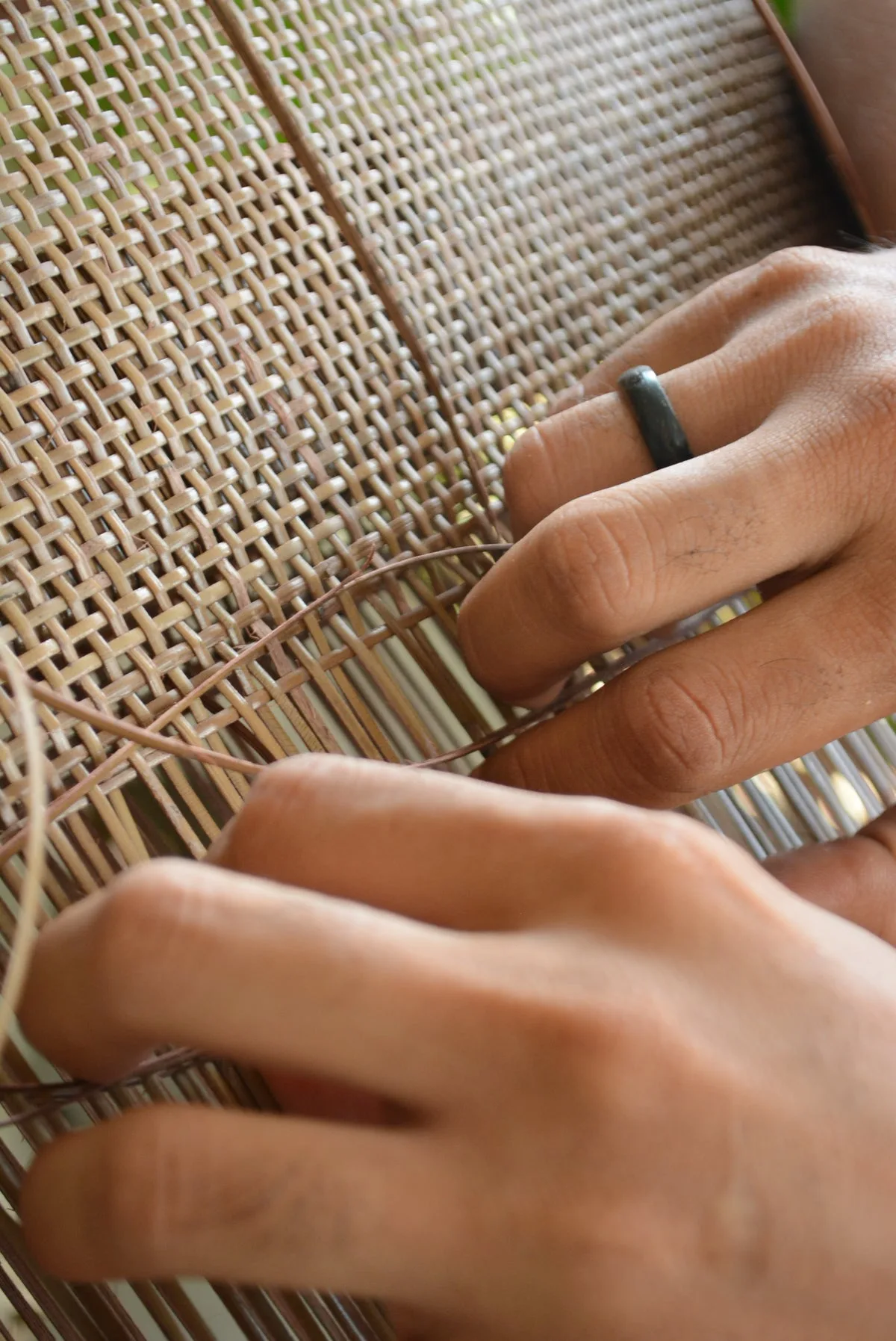
One of the fastest-growing plants on earth, harvested regeneratively and FSC-certified for responsible sourcing. Every CAIRUI rattan piece is handwoven in Indonesia by artisans who have practiced this craft for generations.
FSC® Certified Rattan — Verified by SCS Global Services
Our rattan is independently certified under FSC® Chain of Custody standard FSC-STD-40-004 V3-1. This is third-party verified, not self-reported. The certification covers rattan furniture, wicker work, decorative objects, and indoor and garden furniture.
Certificate Code: SCS-COC-700091 · Trademark License: FSC-C197656 · Valid 2024–2029 · Verified by SCS Global Services, Emeryville CAWhere Our Rattan Comes From
All CAIRUI rattan is sourced from Indonesia, which supplies an estimated 80 to 90 percent of the world's raw rattan. Our pieces are handwoven by skilled artisans in the Cirebon region of West Java, where rattan craft traditions go back generations.
Sourcing CountryIndonesia (West Java) — the global center of sustainable rattan production and traditional weaving craft.
The Forest Stewardship Council (FSC) is an independent, non-profit organization that certifies forests and forest products to rigorous environmental and social standards. Our certification is independently audited by SCS Global Services, not self-reported.
Verified
Third-party audited by SCS Global Services, not self-certified
Regrows
The canes are cut and the plant grows new ones, reaching harvest size again in about 5 to 7 years
Community
Supports multi-generational artisan livelihoods in Cirebon, Indonesia
Strong and Light
Light enough to move easily, sturdy enough for everyday seating
Is Rattan Sustainable?
Rattan can be a responsible choice when it is well managed. The plant is a climbing palm, so the canes are cut and the roots stay in the ground to grow new ones. Because rattan grows up through the canopy, it gives forest communities a reason to keep the trees standing.
But most rattan is still collected from natural forests, and the FAO notes that uncontrolled harvesting has used up some species in parts of Asia. That is why certification matters. FSC® certification checks that the rattan in certified products comes from responsibly managed forests, with records that follow it to the finished piece.
Rattan vs Wicker vs Cane vs Bamboo
| Rattan | The plant. A climbing palm with a solid stem that bends when steamed. |
| Cane | The thin outer skin peeled from rattan. Used for woven panels on chair backs, headboards and cabinet doors. |
| Wicker | Not a material. It is the weaving method, and it can use rattan, willow or synthetic fiber. |
| Bamboo | A grass with a hollow stem. Rattan is solid, which is why it can be bent into curves. |
Many of our pieces are rattan woven in a wicker style, which is why the words get mixed up.
Where Rattan Falls Short
- It is not for open-air use. Rain and strong sun dry the fibers out. A covered porch is the limit.
- Very dry rooms can make it brittle. Keep it away from radiators and vents.
- Open weaves collect dust, so give them a soft brush now and then.
Care and Maintenance
Keep away from prolonged direct sunlight to prevent drying and cracking.
Wipe down with a slightly damp cloth for routine cleaning. Air dry completely.
For deeper cleaning, use a soft brush with mild soapy water and air dry fully.
Occasional linseed oil treatment maintains flexibility and natural luster.
Frequently Asked Questions
Thoughtfully sourced. Built to last.
FSC-certified rattan, handwoven by skilled artisans in Indonesia.
Shop Rattan Collection